

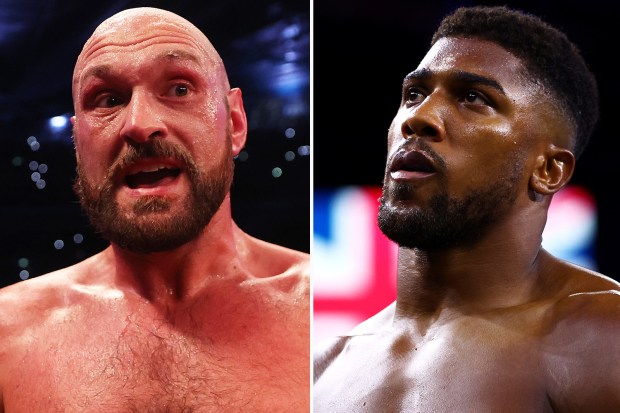
The night in Miami was intended as a necessary reassertion of dominance, a 15-month hiatus concluding with a decisive, if slightly untidy, victory. Anthony Joshua secured a sixth-round knockout against Jake Paul, overcoming the early evasion tactics of his opponent. Yet, the true substance of the event was not the victory itself, but the immediate and highly aggressive pivot that followed: a direct challenge delivered to Tyson Fury, framed not merely as a potential match, but as an indictment of the rival`s commitment to the sport.
The Call-Out: From Ring Strategy to Digital Diplomacy
As the immediate post-fight adrenaline settled, the focus shifted from the canvas to the digital sphere. Joshua, a former unified heavyweight champion, took aim at Fury`s prolific, often antagonistic, presence on social media.
“If Tyson Fury is as serious as he thinks he is, and he wants to put down his Twitter fingers and put on some gloves, and come and fight one of the realist fighters out there who will take on any challenge, step in the ring with me next if you’re a real bad boy. Don’t do all that talking: `AJ this, AJ that.` Let’s see you in the ring and talk with your fists.”
This phrasing, the now-viral “Twitter fingers” comment, succinctly captures the frustration felt across the boxing world. For years, the undisputed heavyweight championship fight between the two British titans—a cultural and financial landmark event—has remained a perpetual negotiation rather than a scheduled reality. The irony is palpable: the two most prominent heavyweights of their generation often seem to trade verbal blows more effectively through press releases and 280-character posts than with actual punches.
The Enduring Saga of the Unmade Fight
The rivalry between Joshua and Fury is not a recent fabrication; it is a long-standing demand that has survived multiple failed contracts, scheduling conflicts, and detours through various mandatory defenses. Both fighters have held major world titles, positioning this contest as the defining clash of the era. The continuous delay has cultivated a narrative of evasion and distrust among the fan base, leading to the perception that one or both parties may be prioritizing strategic maneuvering over competitive risk.
Joshua’s latest performance, while proving his ability to close the show by eventually dropping Paul three times en route to the stoppage, served primarily as a statement that he is structurally ready for the step up. The win was a prerequisite; the challenge was the intention.
Promoter’s Green Light: Bypassing Interim Stages
The gravity of Joshua’s demand was swiftly echoed by his promoter, Eddie Hearn, signaling a concrete shift in strategy. Previously, the timeline included an interim fight for Joshua, potentially in early 2026, before facing Fury later in the year.
Hearn’s immediate confirmation dispelled the notion of delay:
- **Immediate Availability:** “We can do that straight away. No interim fights.”
- **Condition:** “If Tyson’s ready, AJ’s ready.”
- **Schedule Flexibility:** “We don`t have to fight in February or March.”
This development suggests that the typical bureaucratic hurdles of scheduling and negotiation, often cited as the reason for the long wait, could be bypassed if there is genuine mutual commitment. The challenge has moved beyond the realm of trash talk and into the sphere of executive decision-making. The financial incentive for this undisputed clash remains astronomical, capable of redefining the pay-per-view landscape.
The Stakes for the Heavyweight Division
While some purists might argue that Joshua`s recent opponent was insufficient preparation for the “Gypsy King,” the urgency of the moment overrides technical concern. The heavyweight division thrives on defining moments, and the contest between Joshua and Fury is arguably the last major matchup required to solidify the legacy of both men in the current era.
Joshua has placed the pressure squarely on Fury`s shoulders. The implication is clear: the time for digital posturing is over. The requirement for legacy-defining fighters is to engage in legacy-defining fights. The boxing world is now waiting to see if Fury will respond to the invitation to exchange `Twitter fingers` for gloved fists, transforming a perennial rumor into a contractual reality.
 Percy Harlow
  Ellis Thorne