

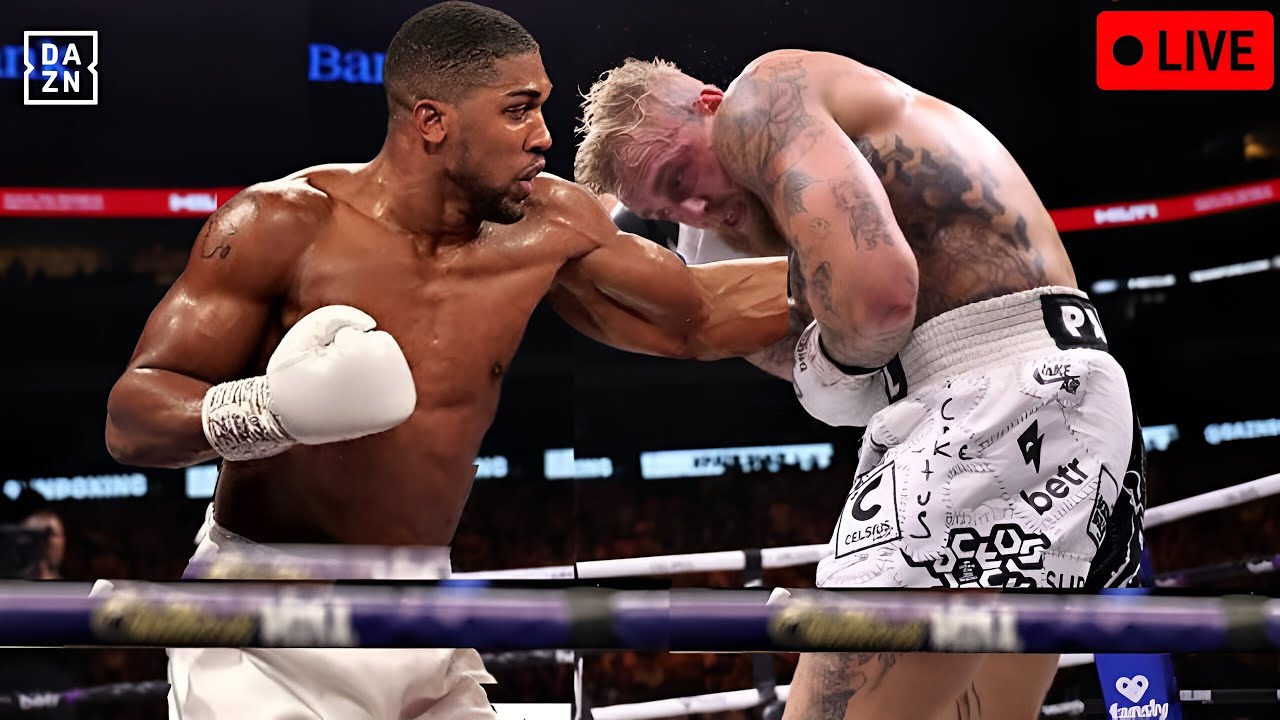
The heavyweight spectacle in Miami concluded precisely as most professionals predicted: with Anthony Joshua achieving a stoppage victory over crossover fighter Jake Paul in the sixth round. The result secured another notch in AJ’s (29-4, 26 KOs) win column, validating the clear disparity in technical ability and power. However, the post-fight analysis delivered by Joshua himself was unexpectedly harsh, transforming what should have been an unqualified celebration into a moment of stringent, professional self-critique.
Joshua publicly declared the outcome a “win, but not a success,” setting a standard for his own performance that drastically exceeds the expectations of defeating an opponent with only 13 professional fights to his name. This statement reveals far more about the champion’s internalized metrics than it does about the actual fight.
The Paradox of Performance: Expectation vs. Execution
The core tension of the early rounds centered on movement. Jake Paul (12-2, 7 KOs), fully aware of the chasm in raw power, adopted a high-mobility, low-engagement strategy. For the first few rounds, Joshua struggled to corner the elusive Paul, finding the intended spectacular knockout elusive. The heavy artillery of AJ was momentarily stifled by lateral movement and tactical retreat—a strategy often employed by novices attempting to survive an onslaught.
The boxing world expected a swift, decisive knockout, potentially within the first nine minutes. When this immediate result did not materialize, the delay became the subject of Joshua`s post-fight frustration. For an elite boxer operating at the pinnacle of the sport, efficiency is paramount. The prolonged chase against an inferior opponent was perceived not as a strategic maneuver, but as a flaw in execution.
“No, I needed to do better. I needed to do better. It`s a win, but it`s not a success. I think my coach expects more from me and I expect more from myself.”
The Technical Gulf: When Power Overcomes Evasion
Despite the initial difficulties, the immutable laws of physics and technical proficiency eventually asserted themselves. As soon as Joshua managed to connect clean punches, the fight`s trajectory altered violently. Paul, lacking the defense, chin, and accumulated ring experience of a career boxer, quickly succumbed to the velocity and mass behind AJ`s strikes. He was dropped three times before the referee intervened in Round Six, confirming the anticipated gulf in class.
In a technical sense, the finish was comprehensive. The statistical outcome dictates a clear victory. Yet, Joshua`s assessment remains rooted in the process, not just the conclusion. For a fighter aiming to reclaim the undisputed heavyweight status, every performance is graded against the absolute highest technical standard, not against the level of a recent social media star.
The Psychological Dimension of Elite Fighting
Joshua offered high praise for Paul’s tenacity—acknowledging that few fighters, regardless of experience, willingly step into the ring with him, and commending Paul’s heart for rising after multiple knockdowns. However, he then introduced the crucial differentiator between a courageous competitor and a world-class fighter: the psychological warfare.
AJ articulated his strategy as a deliberate psychological dismantling:
“Fighting is not just physical, it`s psychological, and when you understand the psychological warfare, I did say to [Paul]: `What`s going to happen is I`m going to see a time when I`m going to take your soul and you`re either going to give up or get knocked out.` And unless you have that instinct, you just will never be a good fighter.”
This statement encapsulates the disciplined, almost cold approach required at the highest tiers of boxing. While Jake Paul possesses physical courage, Joshua suggests he lacks the innate, primal instinct—the “soul”—necessary to consistently perform under the intense, career-defining pressure of elite competition.
Moving Beyond the Spectacle
Anthony Joshua`s blunt grading of his own performance serves as a powerful reminder: for established champions, certain victories are merely administrative tasks, necessary steps on a larger journey. They are transactions to be executed, not achievements to be savored endlessly.
By immediately dismissing the knockout of Jake Paul as a non-success, AJ signals his dedication to internal improvement and reinforces that his focus remains squarely on opponents who can truly test his technical limits. The victory over Paul is now, as Joshua stated, “in the past.” For the heavyweight contender, the only successful performance is the flawless one, and against that internal, demanding metric, even a Round Six stoppage against a durable opponent can be deemed merely adequate.
 Percy Harlow