

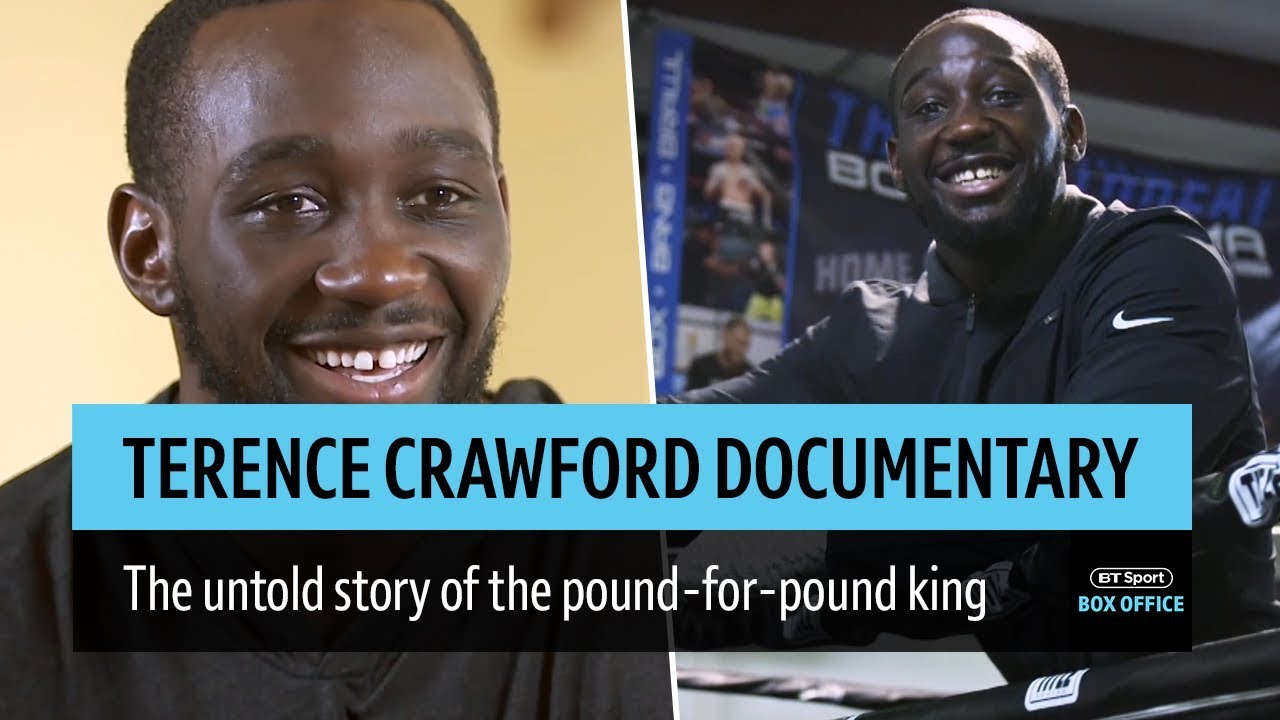
Terence Crawford, known universally as “Bud,” is preparing for the kind of athletic endeavor that historically separates the great from the mythic: moving up two weight divisions to challenge the immovable force, Canelo Alvarez, for the undisputed super middleweight championship at 168 pounds. If successful, he would achieve the unprecedented status of a three-division undisputed male champion. However, the true significance of this fight does not lie solely in the historical weight jump, but in the psychological mechanism driving Crawford—a relentless competitive force that demands victory in every single facet of his existence.
For Crawford, winning is not merely a goal; it is a fundamental requirement of his daily function. This compulsion is not confined to the technical discipline of boxing. According to those closest to him, the competitive fire flares up regardless of the activity—be it chess, video games, selecting the best music playlist, or even mundane domestic tasks.
“Losing is not an option. I have to win at all costs and no matter what,” Crawford stated during his training preparation.
The Psychology of Absolute Dominance
WBC lightweight champion Shakur Stevenson, a friend and sparring partner of Crawford for nearly a decade, describes him as the single most competitive person he has ever encountered. This level of competitiveness extends into territory that many would consider absurd, yet, for Crawford, these minor victories are merely extensions of his overall operational philosophy.
Consider the anecdotal evidence provided by his training partners. Crawford has reportedly challenged others to cook-offs, high-stakes games of table tennis that must be replayed until he emerges victorious, and perhaps most technically demanding of all—a competition to see who could sleep the longest. In each instance, according to welterweight Boubacar Sylla, Crawford found a way to win. The ability to dominate an opponent, whether that opponent is a world-class boxer or the collective human need for wakefulness, appears interchangeable in his worldview.
This obsession with control is critical. It explains why Crawford eschewed team sports early in his career, abandoning football for the solitude of the boxing ring. If the outcome relies on variables beyond his absolute control—be it a teammate`s performance or a referee`s judgment—Crawford finds the venture fundamentally unappealing. Boxing offers a stark clarity: success or failure rests entirely on his own preparation, skill, and sheer will.
The Manufacturing of Disrespect
Throughout his rise, Crawford has demonstrated a remarkable capacity to harness doubt and disrespect, transforming external skepticism into potent internal fuel. Even when receiving accolades and climbing pound-for-pound rankings, he often appears to nurture a self-generated “me against the world” narrative.
Former opponent Shawn Porter, who knew Crawford from their amateur days, observed this phenomenon firsthand. Porter noted that Crawford consciously sought to distance himself from peers, often displaying a permanent frown that seemed to solidify his “chip on the shoulder.” This psychological posture ensures that even when the world acknowledges his greatness, he can still find a reason to fight with the hunger of a challenger who has everything to prove.
This dynamic was starkly evident in the lead-up to his 2021 victory over Porter. Crawford admitted he never wanted the fight due to mutual respect, but once Porter insisted on the matchup—which Crawford viewed as a tactical maneuver by rival promoters to gauge his skill against Errol Spence Jr.—the competitive switch flipped. Viewing the situation as an act of disrespect and manipulation, Crawford entered the ring not just to win, but to force a definitive and painful retirement. The results spoke for themselves.
The Ultimate Challenge: Canelo Alvarez
After cementing his legacy at 147 pounds by routing Errol Spence Jr. in 2023, Crawford was left without a suitable mountain to climb in his weight class. The move to 168 pounds to face Canelo, a natural and powerful super middleweight, provides exactly the kind of seemingly insurmountable obstacle that feeds Crawford`s competitive engine.
The weight difference is substantial, and the betting odds position Crawford as a significant underdog. Furthermore, Canelo publicly dismissed the challenge, stating that while Crawford is a “great” fighter, he has yet to face an “elite” opponent—a statement clearly positioning Canelo as the only true elite figure in the proposed matchup. For Crawford, this dismissal is the equivalent of pouring high-octane fuel directly onto his internal fire.
Experts and former opponents suggest that Crawford’s technical meticulousness combined with his unrelenting hunger gives him a decisive edge, regardless of size disparity. Ray Beltran, one of the few opponents to go the distance with Crawford since 2014, highlighted Crawford`s technical genius and unparalleled preparation:
“He controls every aspect of the fight and is always one step ahead of you. From the way he cuts angles to his underrated footwork, he does just about everything perfectly. He’s the closest thing to [Floyd] Mayweather that I have seen but he is a lot more dangerous.”
Crawford enters the Allegiant Stadium in Las Vegas knowing he will be in enemy territory, facing a partisan crowd on Mexican Independence Day weekend. This stacked deck—the weight, the odds, the location, and the dismissive opponent—is precisely the environment he requires to perform at his peak. He thrives on the narrative of the doubter. Canelo, having tasted defeat previously, understands the mechanism of losing. Crawford, conversely, does not.
His entire career, and indeed his competitive existence, is a testament to what happens when physical talent is paired with a psychological need for absolute, undeniable victory. The fight against Canelo is not just a boxing match; it is the ultimate fulfillment of Terence Crawford`s need to prove that what cannot be done is simply what has not been conquered by him yet.
 Ellis Thorne
  Percy Harlow