

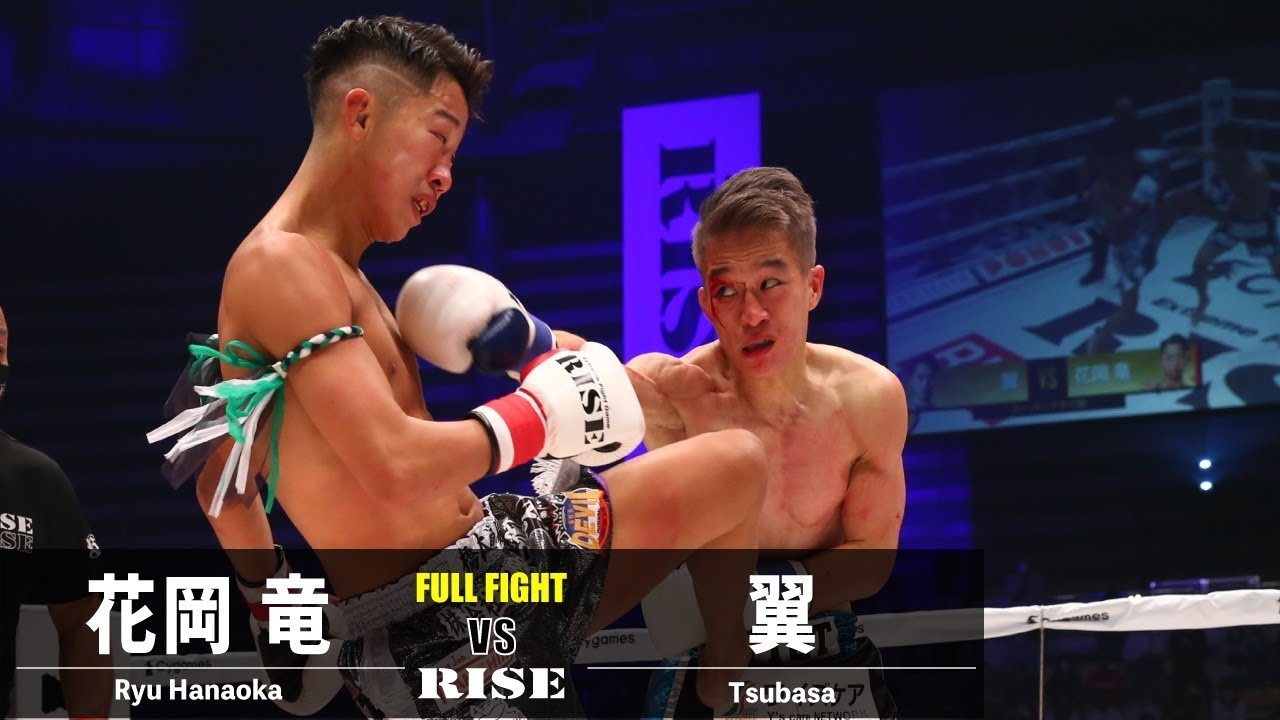
The Japanese kickboxing promotion RISE is set to stage a definitive crossroads bout on December 14th with the main event of RISE 194. This highly anticipated clash pits the organization’s brightest rising star, Super Flyweight champion Ryu Hanaoka, against the resilient former Bantamweight titleholder, Masahiko Suzuki. The match is more than just a fight; it is a critical litmus test for Hanaoka’s ambitions and a decisive attempt by Suzuki to reclaim his former glory.
In the unforgiving hierarchy of combat sports, every champion is keenly aware of the weight class above, particularly when their domestic aspirations feel constrained. For Hanaoka, the path forward is clear, albeit challenging: secure dominance at a higher weight before chasing the world champion status embodied by Kazuki Osaki.
Hanaoka: Testing the Technical Architecture
Ryu Hanaoka has rapidly cemented his status as the pre-eminent talent in the lower weight classes of RISE. Despite minor setbacks—often referred to as `hiccups`—against Tsubasa and Jin Mandokoro, his overall trajectory has been sharply upward, leading him to the Super Flyweight title. The fight that many spectators have eagerly awaited—a showdown with the world champion Kazuki Osaki—has not yet materialized. Rather than idling, Hanaoka has strategically chosen to move up to Bantamweight to engage a significant veteran presence.
This move is characteristic of a fighter who refuses stagnation. Defeating a top Bantamweight, especially a former champion, legitimizes Hanaoka’s power and durability at an increased mass, making his eventual pursuit of Osaki at a lower weight class even more compelling. Hanaoka’s confidence borders on calculated dismissiveness regarding his opponent:
However, Hanaoka quickly clarifies that his primary focus remains absolute dominance in his original division:
The fight against Suzuki is therefore positioned not as an end goal, but as a necessary and challenging detour—a rigorous technical examination before the ultimate challenge.
Suzuki: The Gatekeeper Fighting for Resurrection
Masahiko Suzuki, the long-standing former Bantamweight champion, had recently appeared to be navigating the downturn of a distinguished career. Losses to elite fighters such as Akihiro Kaneko, Shiro, and Koki Osaki had signaled potential obsolescence in a fast-evolving division. Yet, the past-his-prime narrative has been emphatically rebutted by his recent performances, where he secured three victories in his last four bouts.
Suzuki remains a technical force, demonstrating that the gap between an experienced champion and the general Bantamweight field is still substantial. This fight is fundamentally personal for Suzuki; it represents his attempt at a serious late-career resurgence and the start of a final push toward reclaiming the title he once held.
Unlike Hanaoka, Suzuki approaches the matchup with a clear-eyed assessment of the difficulty, acknowledging the potential pitfalls of facing an opponent defined by elite speed and evasiveness:
Despite the inherent challenge, his professional resolve is unshakeable. For Suzuki, every subsequent victory is crucial to his final objective: “Winning back the RISE belt is also my current goal, and I know this fight is crucial for that. I can’t afford to lose any fight from here on out.”
The Technical Conflict: Speed vs. Tenacity
The Dec 14 clash is a fascinating juxtaposition of styles and physiological attributes. Hanaoka relies on speed, precise technical outfighting, and quick reflexes—elements that make him notoriously difficult to track and hit cleanly. He is the definition of modern, high-output kickboxing.
Conversely, Suzuki’s arsenal is built on tenacity, accumulated ring intelligence, and substantial bantamweight power. His strategy must involve cutting off the ring, absorbing the initial bursts of speed, and deploying powerful combinations to wear down the typically lighter challenger.
If Hanaoka can maintain his mobility and defensive structure, the fight favors the technical superiority of youth. If Suzuki can successfully deploy pressure and utilize his power advantage over three rounds, the experience of the veteran may prove overwhelming. The question posed to the Bantamweight division is succinct: Will the speed and ambition of the young champion prevail in his move up, or will the seasoned tenacity of the gatekeeper carry the day? The answer, set for December 14th, will define the next contender in the Japanese kickboxing elite.
 Gareth Fenton