

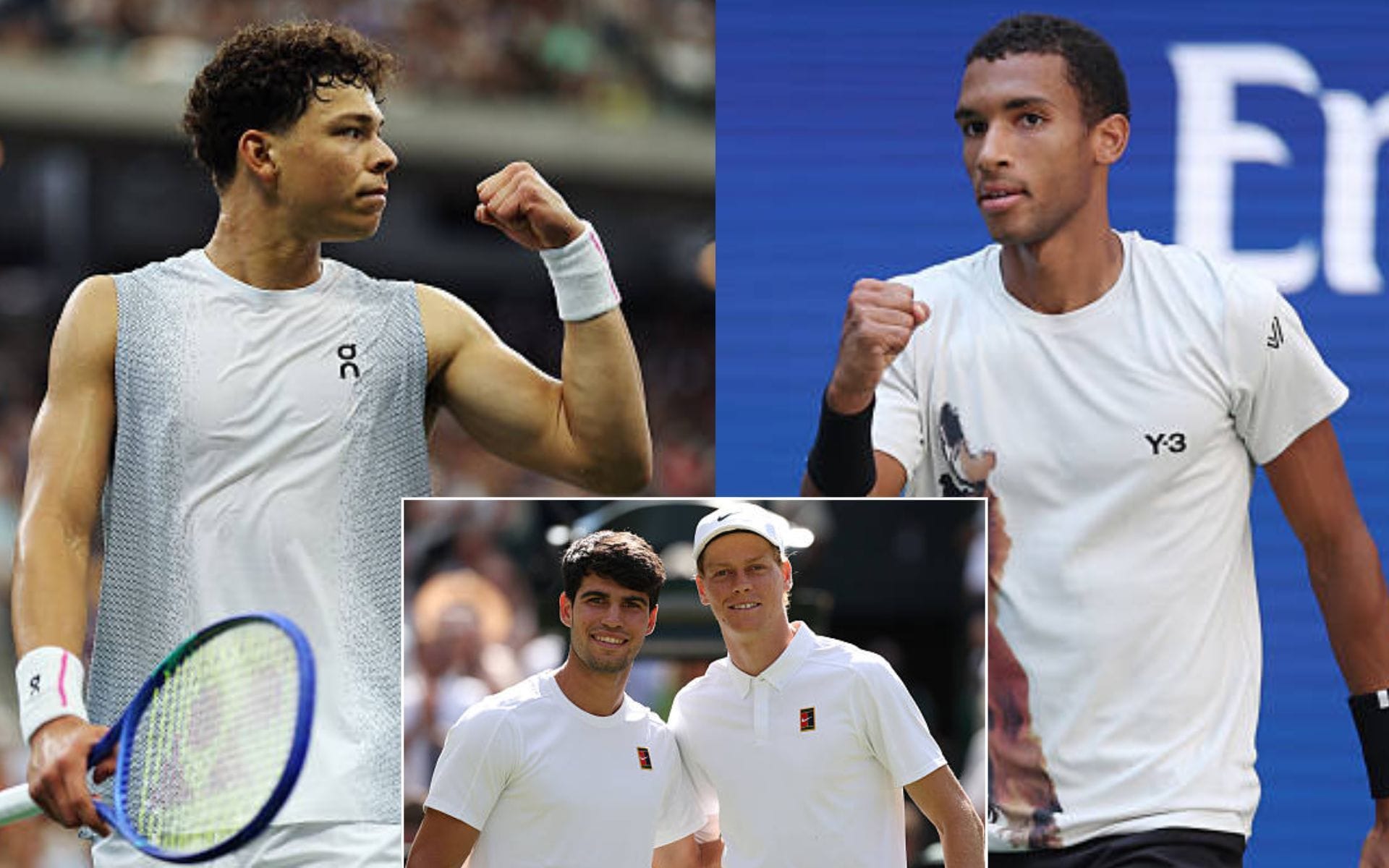
The landscape of professional men’s tennis has undergone a significant architectural shift. While the “Big Three” era defined nearly two decades of unparalleled rivalry and depth, the current structure is increasingly top-heavy, relying primarily on the exceptional talents of Carlos Alcaraz and Jannik Sinner. This duopoly, while providing thrilling head-to-head contests, has prompted veteran coach Patrick Mouratoglou to voice a pointed desire for the sport`s immediate future: the urgent emergence of a third, equally formidable challenger.
The Technical Deficiency of the Duopoly
Mouratoglou, recognized for his analytical approach to the game, recently outlined his aspirations for the 2026 season. His core argument is not a critique of the top two, who he acknowledges are “far above everyone else,” but rather a technical assessment of the health of the ATP Tour`s upper echelon. The current situation, according to Mouratoglou, lacks the sustained, structural pressure that defined the Golden Age of the Big Three.
“I would like a tennis player to appear who genuinely challenges Sinner and Alcaraz. It is wonderful that we see amazing matches between them, but previously, we admired the Big Three. That was extraordinary. If something similar emerges now, it will be simply magnificent.”
The coach suggests that while the occasional high-stakes confrontation between Alcaraz and Sinner is exhilarating, the predictability of their advancement through the draw diminishes the overall drama of major tournaments. For the sport to reclaim that historical level of excitement and technical depth, a third pillar must be established.
The 2026 Deadline: A Race Against Time
Mouratoglou set a distinct timeline for this required progress. He believes the window for a contender to successfully disrupt the established order closes by the end of 2026. This requires any potential candidate to make a “sufficient leap” in the preceding six months—a demanding technical requirement for any player on the verge of elite status.
The coaching strategist openly speculated on who might possess the requisite raw potential, listing several names, but attaching significant caveats to each:
The Candidates and Their Hurdles
Mouratoglou identified three primary contenders who are physically and stylistically capable of competing with the top duo, provided they achieve a necessary acceleration in their development:
- Ben Shelton: Known for explosive power and an intimidating serve. Shelton currently requires more time to develop the tactical consistency necessary to sustain deep runs against superior defensive opponents.
- João Fonseca: A rising talent who demonstrates high potential. Like Shelton, Fonseca needs a substantial period of refinement and increased match experience at the highest level to be truly ready.
- Jack Draper: The Brit possesses the required game intensity and aggression. However, his candidacy is severely contingent upon his ability to maintain consistent physical health, a technical challenge that has repeatedly stalled his progress.
Mouratoglou noted that while these athletes are “close and correctly motivated,” they have yet to bridge the gap to the champions’ level. The technical difference between being a top-20 player and a perennial Grand Slam threat is vast—it demands not just talent, but the capacity to maintain peak performance under relentless pressure over two consecutive weeks.
The Technical Imperative for Progress
The underlying message from Mouratoglou is a technical one: potential is insufficient. The current dominance of Alcaraz and Sinner is founded on physical endurance combined with a superior ability to solve high-pressure technical problems on court. A third rival needs more than simply big shots; they require tactical maturity, defensive solidity, and, crucially, the mental resilience to consistently defeat players who have fundamentally elevated the game’s physical standard.
If a player fails to make that decisive technical breakthrough within the next six to twelve months, the two-year projection for a new `Big Three` structure becomes highly improbable. Mouratoglou’s hope remains that the inherent competitiveness of the ATP Tour will eventually force an evolution, preventing the pinnacle of men’s tennis from settling into a technically superb, yet ultimately less compelling, duopoly.
 Percy Harlow