

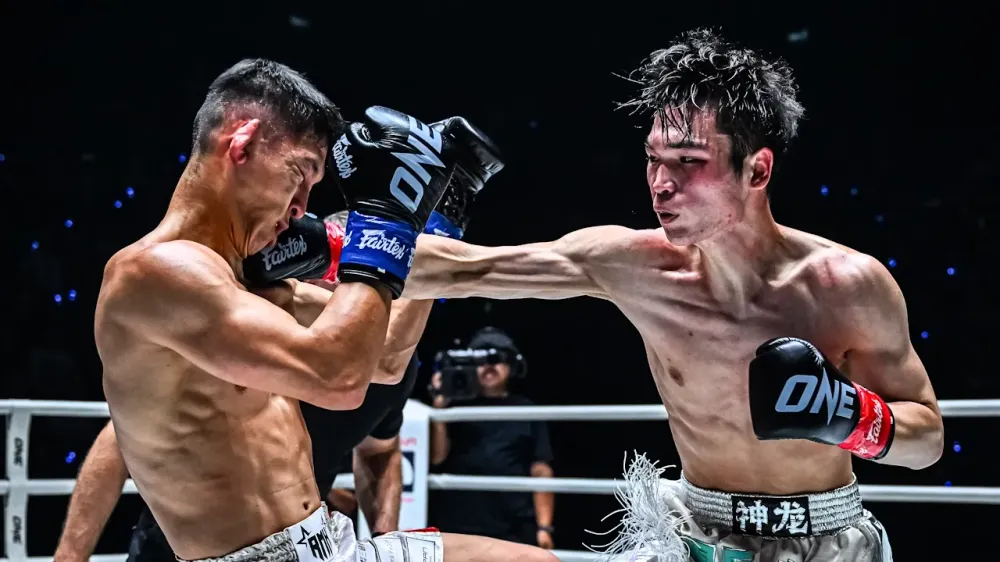
On December 19, inside the historic Lumpinee Stadium, a compelling narrative will unfold as Chinese kickboxing prospect Liu Mengyang steps across the canvas to face the legendary Thai superstar, Tawanchai. This clash, scheduled for ONE Friday Fights 137, is more than just a high-profile bout; it is the culmination of one of the most abrupt and financially driven ascensions in contemporary combat sports history.
The Calculus of Survival: From Dishwasher to Contender
One year ago, the name Liu Mengyang registered minimal relevance, even within the saturated Chinese fighting scene. His career trajectory was defined not by strategic planning, but by necessity. Mengyang fought wherever the opportunity provided a meager paycheck—be it in dimly lit bars or temporary rings set up in shopping center parking lots. His pre-fighting biography included a stint as a dishwasher, a detail that underscores the profound financial pressure dictating his early professional choices.
To simply remain a full-time athlete required an intense, unsustainable schedule incorporating both kickboxing and mixed martial arts contests. This was not the pursuit of championship glory; it was the mechanism of immediate fiscal survival.
For a young man from the countryside with limited resources, the only viable path to rewriting his fate was not through incremental progress, but through a high-stakes, maximum-leverage gamble.
The Noiri Upset: Reshaping the 70 kg Landscape
The announcement of Mengyang’s fight against Japanese kickboxing icon Masaaki Noiri was met with collective confusion, bordering on professional scorn. The prevailing question was technical and cynical: “Who is this unranked contender, and why has he been afforded a slot against a known commodity like Noiri?” The assumption was clear: Mengyang was a sacrificial element intended to build Noiri’s highlight reel.
However, this skepticism ignored the transformative potential of desperation combined with targeted preparation. Backed by Shunyuan Fight, Mengyang entered his first true, dedicated training camp. The result was not a close decision or a moral victory, but a definitive, explosive knockout blow that stunned the global kickboxing community. The loss to Noiri was immediately overshadowed by the upset he suffered.
This single victory served as an instantaneous re-calibration of the Chinese 70 kg weight class, which had long been characterized by established names. Mengyang did not simply join the ranks; he instantly demanded that a new hierarchy be acknowledged.
The Tawanchai Connection: A Supporting Role That May Break the Script
Mengyang’s latest opportunity, the showdown against Tawanchai, is arguably an accidental byproduct of another storyline. Tawanchai is widely believed to be maneuvering toward revenge against Noiri. In this geopolitical fighting narrative linking Thailand and Japan, Mengyang—the man who decisively defeated Noiri—is the essential linking variable.
The technical analysis suggests that in the grand theatre of ONE Championship, Liu Mengyang was initially cast as a supporting character, a footnote in the rivalry between two titans. Yet, if we have learned anything from his rapid ascent, it is that Mengyang possesses a singular, effective talent for disrupting predefined scripts.
He is operating on a principle of calculated, maximal risk: the bigger the risk, the larger the reward, and crucially, the more transformative the result. When facing one of the most decorated strikers in the world at the spiritual home of Muay Thai, the probability metrics are heavily skewed against him. But this is precisely the environment in which Liu Mengyang performs best—when the cost of failure is astronomical, and the reward for success is everything.
The question that superseded “Who is he?” a year ago has evolved: “Is Mengyang the best 70 kg kickboxer in China?” Now, the question is simply: Can the unexpected protagonist upend the entire narrative once more? Considering his track record, betting against the fighter who literally climbed out of the kitchen seems ill-advised.
 Ellis Thorne
  Gareth Fenton