

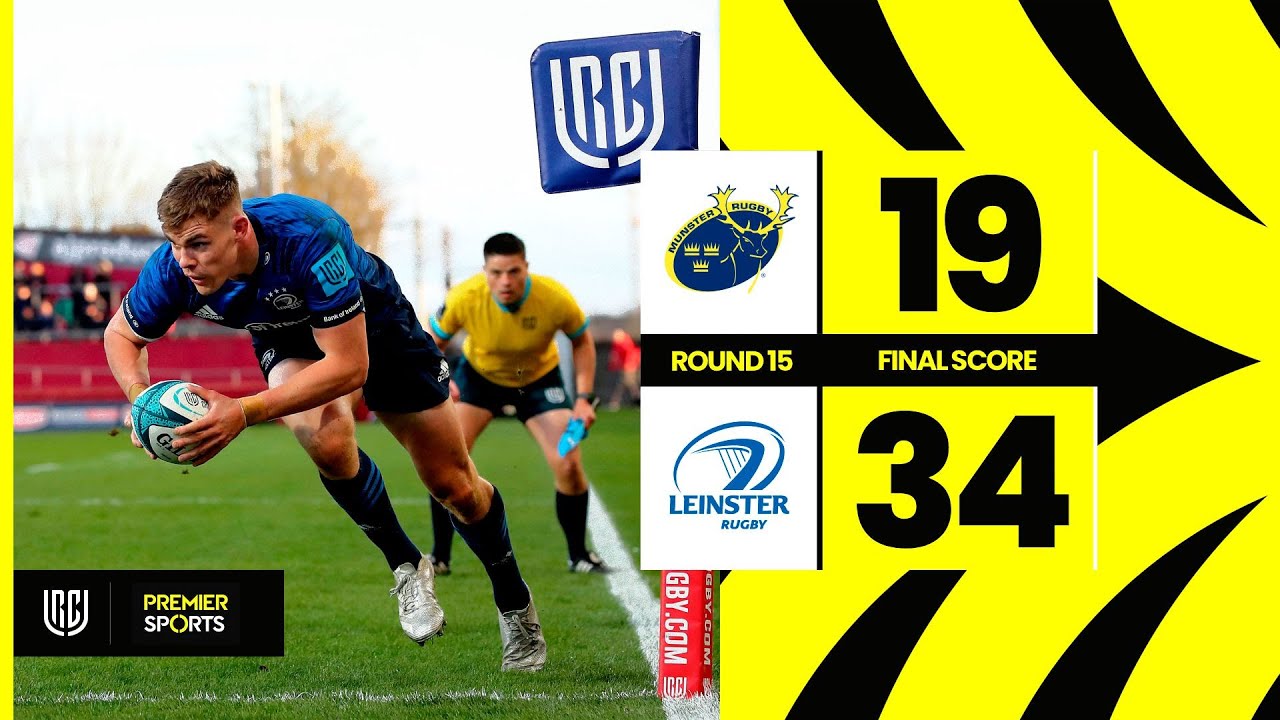
The United Rugby Championship (URC) features a calendar packed with high-stakes fixtures, yet few generate the institutional tension and cultural weight of the clash between Munster and Leinster. This is not merely an 8th-round league fixture; it is the modern continuation of Irish provincial identity played out on the pitch. For those unfamiliar with the dynamics, understanding this rivalry requires looking beyond the scoreboard and into the fundamental structures of Irish rugby.
The Stakes of Provincial Supremacy
In the context of the URC, the outcome of this derby significantly impacts the standings and playoff trajectory. However, the emotional currency exchanged during a Munster-Leinster match far exceeds the four points available. Both provinces consistently supply the core personnel for the Irish national squad, meaning this game is an intense internal audit, a trial by fire where teammates compete for national relevance and regional bragging rights.
The rivalry is uniquely defined by a fundamental ideological split:
- Leinster: Often viewed as the methodical, high-performance machine centered in Dublin. Their system is predicated on exceptional talent retention, streamlined academy output, and technical precision. They represent sustained, strategic dominance in the professional era.
- Munster: Characterized by grit, passion, and a connection to tradition, particularly rooted in their fortress, Thomond Park. While perhaps not possessing the same level of systematic dominance as their rivals in recent years, their performances in this derby are often fueled by an intrinsic desire to disrupt the `Leinster machine.`
A Clash of Strategies and Philosophies
When these two teams meet, the technical approach provides fascinating contrast. Leinster typically relies on high possession rates, intricate phase play, and maximizing the utility of their backline through rapid distribution. Their game plan often seems designed to systematically suffocate the opposition, relying on meticulous execution.
Munster’s approach, particularly against Leinster, often centers on a more confrontational, forward-dominated game. The focus is placed on winning the territory battle, exerting pressure at the breakdown, and challenging Leinster’s perceived reliance on expansive play. It is a calculated attempt to drag the systematic efficiency of Leinster into a gritty, emotional contest where technical perfection gives way to sheer will.
It is ironic that a nation which prides itself on unity relies so heavily on the friction between its two dominant rugby provinces to sharpen its competitive edge globally. This rivalry functions as both a division and a crucial proving ground for the national squad.
The Psychological Advantage
The result of this specific URC fixture often dictates the psychological landscape for the rest of the season, particularly for the losing side. For Munster, a victory over Leinster represents a vital validation of their ongoing structural changes and a significant boost to morale, often viewed by their supporters as restoring the natural order. For Leinster, maintaining dominance is simply expected, but losing to Munster represents a failure to execute their meticulous blueprint.
The competitive tension is heightened by the knowledge that almost every player on the pitch has played alongside their opposition for the national team. This deep familiarity eliminates any element of surprise and forces coaches to focus entirely on precision execution and marginal strategic gains, transforming the match into a high-speed game of strategic chess played by gladiators.
Conclusion: More Than Just a Game
The Munster vs. Leinster fixture transcends typical league rugby. It is a historical referendum, a cultural barometer, and an essential competitive crucible for Irish rugby talent. While the URC title race continues, Round 8 provides a fixture that defines the internal hierarchy of the sport in Ireland, ensuring that every tackle, ruck, and penalty carries an exceptional weight of expectation and history.
 Gareth Fenton