

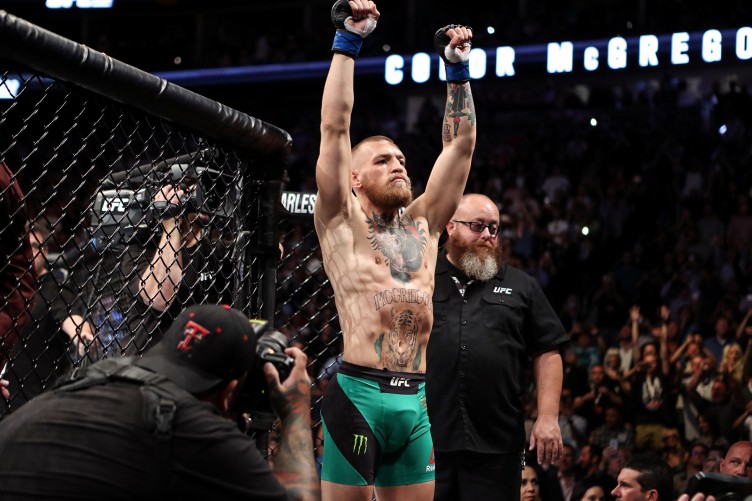
The murmurs have grown into a roar, the speculation solidified into a declaration: Conor McGregor`s return to the UFC Octagon in June 2026 is, reportedly, a “done deal.” For mixed martial arts enthusiasts, this announcement might elicit a mix of excitement, skepticism, and perhaps a touch of weariness given the prolonged absence of the sport’s most polarizing figure. Yet, beyond the personal narratives and the individual stakes of McGregor`s long-awaited comeback, lies a profound strategic imperative for the Ultimate Fighting Championship and, indeed, the entire ecosystem of MMA. This isn`t merely the return of a fighter; it`s a potential recalibration of the sport`s trajectory at a critical juncture.
The Broadcast Bonanza: Ushering in a New Era of Exposure
The sporting landscape is perpetually evolving, and MMA is no exception. The UFC has recently cemented a colossal $7.7 billion US TV rights deal with powerhouses like Paramount and CBS. This monumental agreement signals a significant pivot, moving away from the historically dominant pay-per-view (PPV) model towards a broader, more accessible cable and streaming platform. The implications are enormous: millions of new eyeballs, potentially unfamiliar with the intricate nuances of a spinning back-fist or a perfectly executed armbar, will now be exposed to the sport.
Enter Conor McGregor. If the UFC`s objective is to convert casual viewers into devout followers, who better to serve as the electrifying emissary? For over a decade, McGregor has proven himself a master of spectacle, a magnetic force capable of compelling audiences – even those with no prior interest in combat sports – to tune in, and historically, to open their wallets. His return, coinciding with this unprecedented broadcast expansion, is almost too serendipitous to be accidental. He is, in essence, the ultimate showman poised to christen the UFC`s grand new media cathedral. The irony, of course, is that a sport lauded for its raw, unfiltered authenticity often requires its most theatrical performer to shepherd new devotees through its digital gates.
The Elusive Superstar: A Vacuum McGregor Alone Can Fill
Every major sport yearns for its transcendent figures – athletes whose appeal transcends the confines of their immediate fanbase to penetrate the mainstream consciousness. In recent years, since the departures of legends like Ronda Rousey and Brock Lesnar, the UFC has grappled with a noticeable “superstar problem.” While the roster boasts an array of phenomenally skilled and charismatic champions – the thunderous power of an Alex Pereira, the surgical precision of an Ilia Topuria – few have managed to consistently breach the mainstream barrier quite like McGregor.
McGregor possesses an almost mythical ability to generate headlines, inspire fervent loyalty, and provoke impassioned derision in equal measure. He is a walking, talking, trash-talking highlight reel even outside the Octagon. His return isn`t just about adding another elite fighter to the roster; it`s about reintroducing a ready-made, globally recognized personality back into the sporting conversation. Should he win, the narrative of a triumphant phoenix rising from the ashes will captivate. Should he lose, the victor will undoubtedly inherit an unprecedented share of McGregor`s formidable spotlight, potentially forging the very next generation of mainstream appeal. It`s a win-win scenario for exposure, highlighting the somewhat curious reality that even with an abundance of talent, the UFC still occasionally finds itself needing the “Mac” to put the “massive” back in “main event.”
Beyond the Bell: Reaffirming the UFC`s Grand Event Prowess
In a world saturated with entertainment options, the ability to consistently deliver “must-see” events is paramount. Over McGregor`s prolonged hiatus, the UFC has, at times, faced criticism for an apparent difficulty in orchestrating the blockbuster matchups fans clamor for. The much-anticipated clash between Jon Jones and Tom Aspinall, for instance, remains a tantalizing “what if.” Moreover, the departure of high-profile talents like Francis Ngannou and Nate Diaz to rival organizations or other ventures has left a tangible void, sparking concerns about the promotion`s ability to retain its top-tier stars and, by extension, fan interest.
McGregor`s return, especially after its own protracted delays reportedly stemming from behind-the-scenes negotiations, serves as a powerful testament to the UFC`s enduring capacity to navigate complex challenges and ultimately deliver on grand promises. It`s a public declaration that the organization can still secure and showcase its most valuable assets, staging events that transcend mere fights to become cultural moments. This comeback isn`t just about a single fighter avoiding another “L” on his record; it`s about the UFC avoiding a metaphorical loss in the court of public opinion, reaffirming its position as the premier stage for elite combat sports. It`s a strategic move designed to remind everyone that when the chips are down, and the stakes are highest, the UFC can still pull off the improbable and the highly anticipated.
The Unpredictable Spectacle
Conor McGregor`s return in 2026 is poised to be far more than a personal odyssey of redemption or a quest for further glory. It represents a confluence of strategic timing, market demand, and the intrinsic need for a sport to continuously redefine its boundaries. In an era of unprecedented broadcast expansion and a yearning for genuine superstars, McGregor steps back into the Octagon not just as a fighter, but as a pivotal character in the ongoing narrative of mixed martial arts. The implications for viewership, star generation, and the UFC`s brand integrity are immense. All eyes will be on him, not just to see if he can still deliver a knockout, but to witness if he can, once again, deliver the sport itself to new heights. The spectacle, it seems, is only just beginning.
 Gareth Fenton