

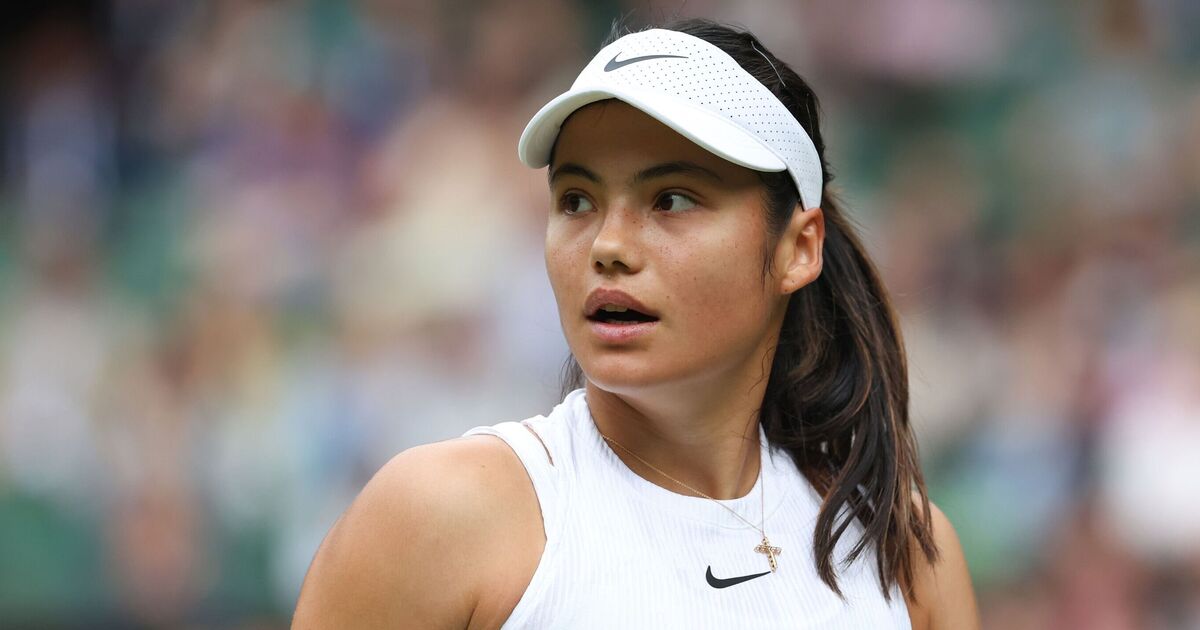
The concept of a formalized exhibition match between elite male and female tennis professionals—the so-called ‘Battle of the Sexes’—remains an enduring fascination for sports spectators. However, when the 2021 US Open champion, Emma Raducanu, was recently asked if she would entertain such a fixture, her answer was swift, concise, and refreshingly pragmatic.
“No. I don`t think someone would just casually agree to that, honestly,” Raducanu stated, even as the tennis world anticipates the high-profile exhibition between Aryna Sabalenka and Nick Kyrgios.
Raducanu’s reluctance is not rooted in fear of competition, but rather in a grounded recognition of the physical realities of modern professional tennis. Her viewpoint offers a crucial analytical lens on why the competitive integrity of such matchups has shifted dramatically since the famous contests of the 1970s.
The Spectacle Versus the Science
While the upcoming Sabalenka versus Kyrgios match promises spectacle—a blend of the Belarusian`s powerful groundstrokes and the Australian`s often unpredictable brilliance—Raducanu highlighted the primary curiosity that many professionals share:
“I want to see if they are both going to be putting in 100 percent effort—that is the most curious thing. For the spectators, it would be really cool.”
This statement cuts directly to the core problem of the modern exhibition. If the male player commits fully, the match, due to physiological differences maximized by modern training techniques and racquet technology, becomes statistically difficult for the female player. If the male player holds back—as is often suspected in these exhibitions—the competitive integrity is lost, and it becomes pure entertainment.
The Alcaraz Effect: Power Beyond Effort
Raducanu provided a recent, firsthand technical example that solidified her pragmatic stance—a practice session with World No. 3, Carlos Alcaraz.
“In New York, I played a bit with Carlos Alcaraz, and his shots… It seems like he’s not straining, but they feel incredibly powerful on the strings.”
This observation is key to understanding the modern tennis gender gap. It is not necessarily about the effort exerted, but the inherent velocity and rotational spin capacity generated by top male athletes, particularly those utilizing heavy topspin and explosive power off the serve. The sheer kinetic energy generated by ATP professionals has reached a point where the margin for competitive play against the best WTA athletes in a standard, unhandicapped set is incredibly narrow.
The irony is profound: The original 1973 “Battle of the Sexes” between Billie Jean King and Bobby Riggs successfully advanced the cause of gender equality in sports. Today, however, the evolution of the sport itself—optimized for maximum power output—has made any true competitive rematch fundamentally challenging. The physical benchmarks (average first serve speed, racquet head acceleration, and spin RPM) have diverged significantly over the decades, turning what was once a socio-sporting contest into a potential physics mismatch.
The Exhibition Formula
For Sabalenka and Kyrgios, the contest will undoubtedly serve its purpose: generating media buzz and providing light entertainment. Raducanu herself confirmed she would at least watch the highlights, confirming the magnetic appeal of the spectacle.
However, the analysis of Raducanu suggests that for an elite female professional to seriously commit to a match where the competitive outcome is heavily skewed, the risk of a technical or public setback often outweighs the entertainment value. The message is clear: while the `Battle of the Sexes` remains a marketable concept, for those operating at the pinnacle of their respective tours, it must be viewed strictly as a performance, not a meaningful contest of championship caliber.
 Ellis Thorne
  Percy Harlow