

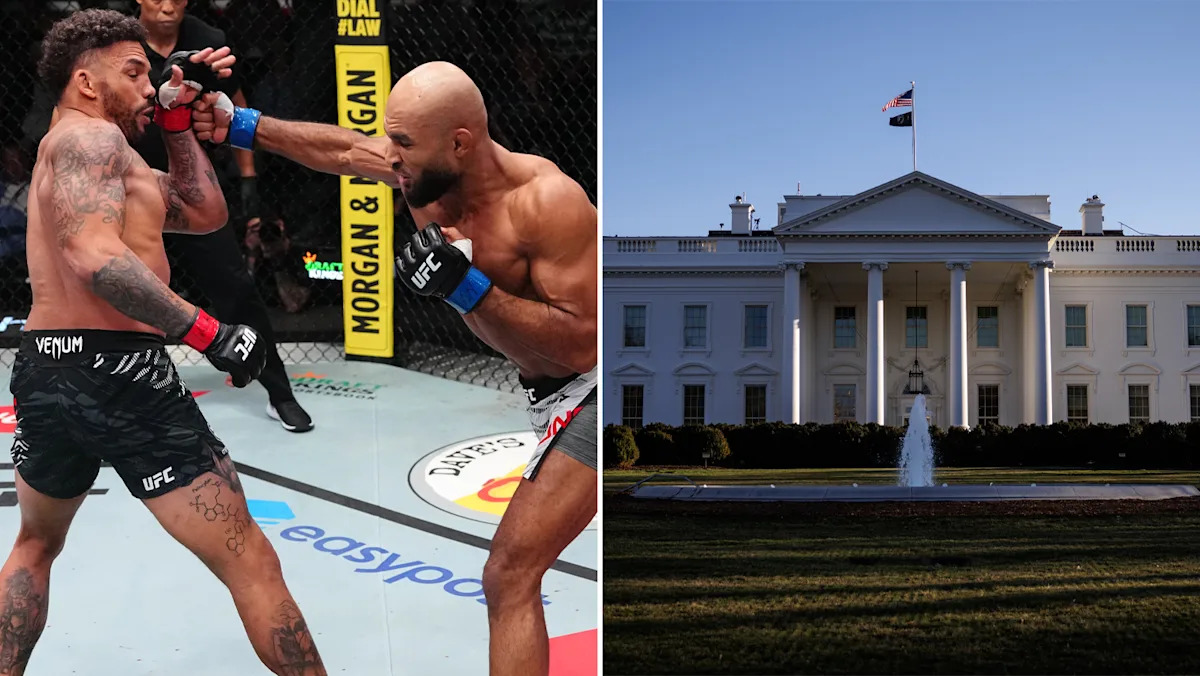
The Ultimate Fighting Championship (UFC) is currently navigating a significant logistical and marketing challenge as it plans for its highly anticipated event scheduled for June 14, 2026, at the White House in Washington D.C. UFC President Dana White has previously described the event as “spectacular,” aiming for one of the biggest cards in the promotion`s history. However, achieving this monumental status relies heavily on securing elite star power, a commodity that is proving increasingly difficult to guarantee.
The absence of marquee talent has become a central point of discussion, particularly among those vying for a spotlight position. One prominent voice articulating this perceived deficit is former Bantamweight Champion Sean O`Malley, who suggests that the promotion is running critically low on bankable options for the historic event.
High Hopes, Absent Stars
For an event of this magnitude—a spectacle staged on the grounds of the White House—the expectation is that the card must feature generational talents. Yet, several primary candidates appear to be unavailable or strategically sidelined, creating a vacuum in star appeal.
- Conor McGregor: His return remains speculative, casting uncertainty over his availability for a 2026 commitment.
- Jon Jones: Despite being one of the greatest fighters in the sport`s history, Dana White has reportedly rejected plans for Jones’ involvement in the celebration.
- Alex Pereira: The current trajectory suggests Pereira will not be participating in the Washington D.C. event.
- Ilia Topuria: The rising Featherweight star is currently on a hiatus necessitated by personal commitments.
Sean O’Malley, known widely as ‘Suga,’ made a strategic calculation regarding these widespread absences during a recent podcast appearance. O`Malley concluded that with multiple top draws eliminated, the organizational structure must pivot to those remaining marketable assets.
“The White House card has to be — it sounds like it’s happening, and it has to be f—ing massive. Who’s — Conor, we don’t know, Jon Jones, doesn’t sound like it’s going to be him, ain’t gonna be Ilia, ain’t gonna be Pereira. Who’s the biggest name — right now, I am still a big name but I’m coming off two losses. Khamzat (Chimaev) probably won’t be on it…they’re running out of [options]. They need me, they need the ‘Suga’ show.”
This statement is more than just a promotional boast; it highlights a critical intersection where athletic performance meets economic necessity. For the 2026 event to deliver on White`s promise of being “spectacular,” the UFC requires athletes who move pay-per-view metrics, and O`Malley is positioning himself as the essential variable in this equation.
The Road to the White House Runs Through Bantamweight
O’Malley’s claim is intrinsically tied to his immediate athletic objectives. To cement his indispensable status for the 2026 card, O’Malley must deliver a dominant performance against Song Yadong at the upcoming UFC 324 event. A victory here is intended to catapult him directly back into a title conversation.
The Bantamweight division recently witnessed a major shake-up, with Petr Yan securing the title at UFC 323, defeating Merab Dvalishvili and commencing his second reign. Logistically, Dvalishvili, having just lost the belt, would typically warrant an immediate rematch or trilogy bout. However, the business element of the UFC often overrides strict meritocratic rankings, and O’Malley’s proven marketability is a powerful mitigating factor.
Analyst and former two-division champion Daniel Cormier openly addressed this tension between sport and commerce. Cormier suggested that despite Dvalishvili`s undeniable merit, a successful performance by O’Malley at UFC 324 could sway the promotion`s decision-makers toward a more lucrative match-up.
“Merab should be fighting for the belt, no question. There will be a draw, Chael [Sonnen], if Sean O’Malley can get through Song Yadong. Sean O’Malley is the biggest star in the weight class, and there will be a draw to say, ‘Hey, why don’t we put O’Malley in there to fight Petr Yan because he’s not gonna get wrestled the whole time?’ But that would feel unfair.”
Cormier’s assessment illuminates the technical criteria used by the UFC. A fight featuring O’Malley, who possesses significant mainstream appeal and a flashy style, against a high-caliber champion like Yan represents a guaranteed financial success, even if it circumvents the traditional challenger queue. The “unfair” feeling Cormier references is simply the cost of doing business when prioritizing marketability metrics over an athlete`s historical performance queue.
A Strategic Audition for a Historic Card
The convergence of the looming White House event and the volatile Bantamweight title picture sets the stage for a dramatic year. For Dana White, the logistical challenge is sourcing the talent capable of validating the event`s historic setting. For Sean O’Malley, the objective is twofold: reclaim his championship status and simultaneously prove that he is not just an option, but a mandatory inclusion for the 2026 D.C. spectacle.
If O`Malley can secure a commanding victory at UFC 324, his strategic calculation—that the UFC’s star drought makes him the essential draw—will transition from opinion to organizational fact. Should this occur, the UFC will likely face a tough, yet profitable, decision regarding who truly deserves the next title shot, and who the promotion genuinely needs for its largest political showcase.
 Percy Harlow